
ESG Ahead Brief
This content requires a membership. Please, log in or subscribe a Premium plan to continue and see the whole content.
BLOG Story

Author: Veini Simolin
Title: ESG and sustainability expert
Blog: Sustainability Weekly in LinkedIn
Posting this from the blistering heatwave of Germany. Have to say that the work of all of the sustainability professionals of the world is starkly on my mind right now. Although sustainability is not just carbon emissions, events like these demonstrate the consequences of not taking our obligation towards our planet seriously. This week will have a mixture of good and bad news. The world hardly ever is black and white.
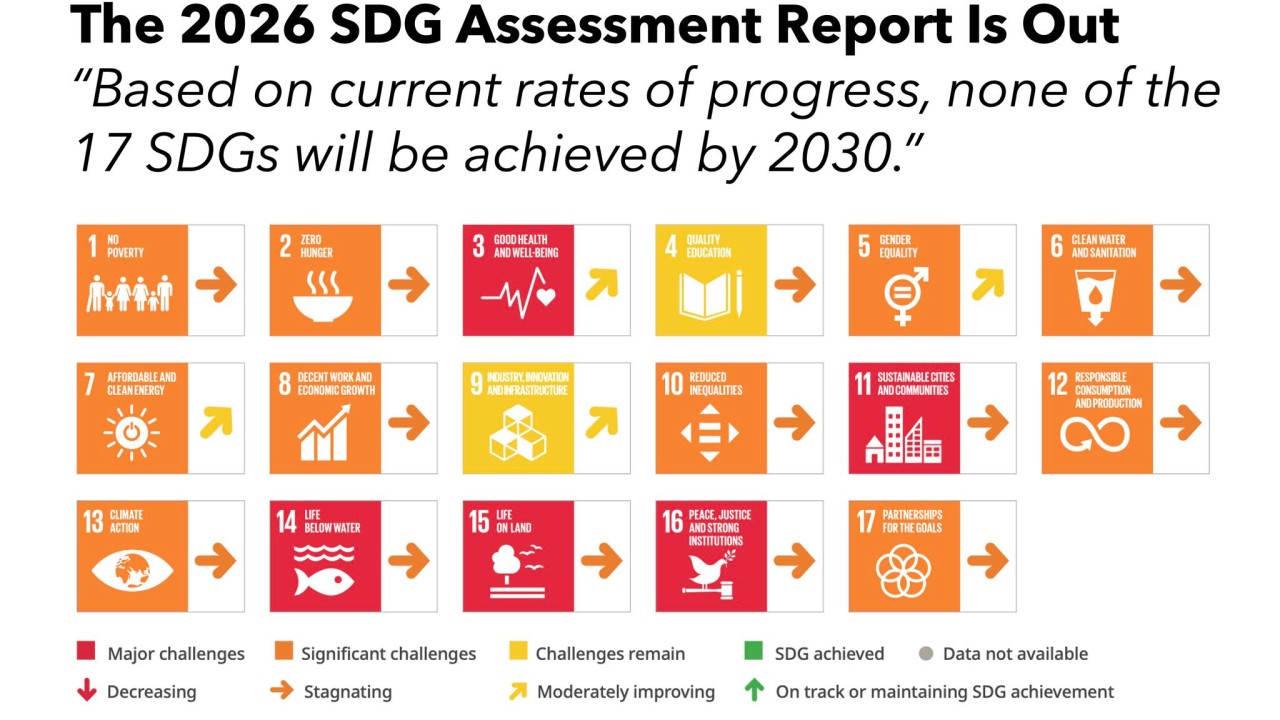
🌐 I’m starting off with some bad news this time. This post from Andreas Rasche gives some insight into the recently published 2026 Sustainable Development Report. The conclusion is not a positive one. One piece of positivity here is that Finland (among the other Nordics) is the country most on track to reach the SDG goals set in 2015, although even the mighty finns fall short of some targets. Give Andreas’ page a visit and read the full report here: https://dashboards.sdgindex.org/
“None of the 17 #SDGs is on track to be achieved by 2030. This is the conclusion of the “2026 Sustainable Development Report” that was just published. Only 16% of the specific SDG targets are on track, while 67% show limited progress and 17% even worsened compared to the 2015 baseline. Country statistics show that the Nordic countries do very well: Finland tops the ranking, followed by Sweden and Denmark. But even the Nordic economies struggle, especially with SDG 12 (Responsible Consumption and Production) and SDG 13 (Climate Action). Encouragingly: “Countries in East and South Asia have achieved greater SDG progress than those in any other region since 2015.” ❗ Generic political commitment and broad SDG endorsements are not enough. Strengthening implementation must be the key priority for the remaining years…”
🧑🔬 Great post next by Gabriella Lovas. SBTI (Science Based Targets Initiative), the initiative behind the most broadly adopted corporate environmental standards has released a new version of their corporate net zero standard. I am actually somewhat of a layman myself when it comes to the SBTI, but this post gives a great summary on what this change means to companies applying the standard in practice! Maybe I should get on with it and dive into the SBTI standard.
“📚 SBTI just released Version 2.0 of the Corporate Net-Zero Standard and if you’re trying to figure out where to start (or whether to stay on V1.3.1 for now), the resource pack they’ve put together is worth checking. Here’s what’s available: ⏩ If you’re mid-journey on V1.3.1 Start with the transition guide: it lays out what changes, what carries over, and the timeline for continuing use of the current version before moving to V2.0. ⏩ If you want the full picture fast The Main Changes Document gives you a structured overview of what’s different in V2.0 without having to read the entire standard from scratch. ⏩ If you’re at the target-setting stage The “How to set targets” resource is the practical companion you’ll want open alongside the standard itself. ⏩ If you have specific questions The FAQ covers Version 2.0 specifics and is worth scanning before you go down a rabbit hole trying to interpret the standard directly. I’ve compiled the five guides into a single resource pack so you don’t have to track down five separate links. One question I’ve seen come up: does CNZS V2.0 compete with ISO – International Organization for Standardization‘s #netzerostandard? Short answer: I don’t know. What I know is that the two are positioned as complementary. ISO may be the entry point for companies just starting out, while SBTi remains the end-to-end framework for setting and meeting science-based targets. They even promise potential for dual validation down the line, so you don’t have to choose. #sustainability”
📈 Ok this article from ESG Today is a bit of a doozy but stick with me.
First, we need to understand what the SFDR (Sustainable financial disclosure regulation) is. In short it is the EU regulation that sets out requirements for investment products, such as funds that want to be able to call their investment sustainable. This is accomplished mainly via the EU taxonomy, which is an instrument that lays out the requirements for a company in any given business to call their activities sustainable. The SFDR classifies investment products based on the percentage of its holdings that align with the taxonomy requirements.
There has been some criticism of the SFDR for not being very clear on the categories of the investment products, namely there are specific articles in the SFDR that seem to describe sustainability categories; however, the lawmakers have said that they are not intended to be used as categories. Now this is getting a little confusing already, which is why the EU has decided to amend the regulation and to bring in actual bespoke sustainable investment categories. These categories will be along the lines of “sustainable, transition, and ESG basic” with different requirements based on which category the investment product is spiring to. The debate this article is about concerns the middle category, “transition”. The crux of the debate is that the EU’s new position is that companies that are expanding and creating new fossil fuel exploration would still be able to be part of the “transition” category, as long as only 20 % of their capital expenditure is allocated into activities that align with the taxonomy requirements I mentioned earlier. This position is in line with the current EU push to water down sustainability regulation, and to me it feels a bit funny, although there are probably experts on both sides of the debate. Still, to me it sounds a bit funny that an investment product containing new fossil fuel exploration could get a sustainability transition category.
🇫🇮 Here is something that I’m more of an expert in, as well as another point in the favor of my country. EFRAG – the organisation behind developing the European sustainability reporting standard (ESRS) has released a case video of 9 SME’s who decided to start their sustainability reporting journey using the voluntary small and medium enterprise reporting standard also developed by EFRAG (VSME). The reason I bring up Finland is that 2 of the 9 companies are actually Finnish! Thanks for bringing this up Jussi Hakanen.
Here are 3 key points from the SME’s in the video:
- Not just reporting. Be it stakeholder co-operation, transparency, or understanding their own business better most of the SME’s in the videos said, that the benefits of doing a VSME report go beyond just the reporting aspect.
- Not as hard as you would imagine. Many of the SME’s also lauded the standard, especially the basic module for being manageable in scope and being very doable for a small firm.
- No need to be perfect. Many of the companies encouraged other SME’s to take on the same task and not be too worried about getting everything done perfectly the first time – reporting is a learning process, and the most important step is the first one. You can always make amendments later.
You can find the videos here:
Great work Monad and West Welding for being a part of this!