


ESG Ahead Brief of the Article
🎁 Premium content preview: This content is normally available only to Premium users. Explore it to see what Premium includes.
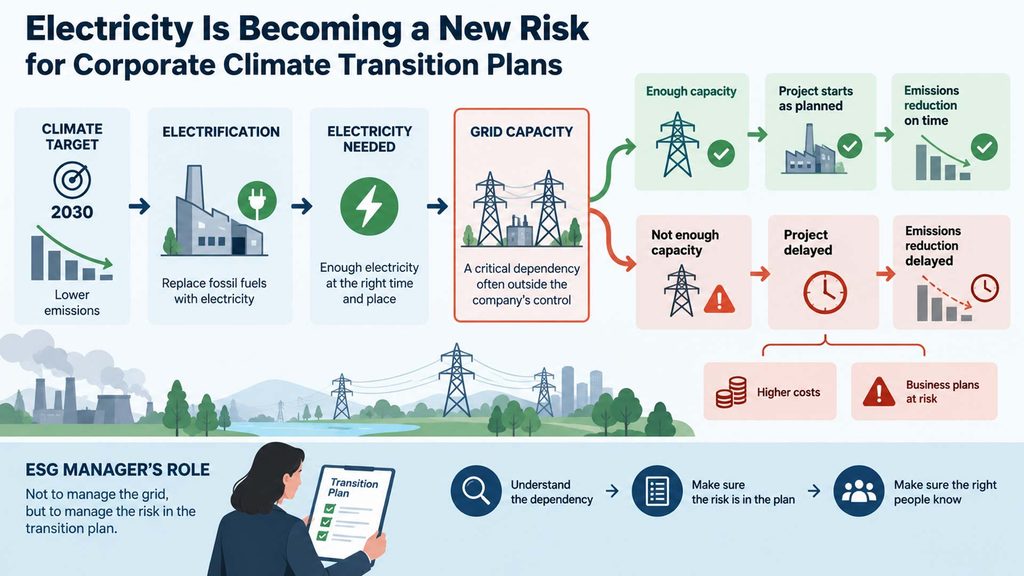
Many companies plan to cut emissions by replacing fossil fuels with electricity. This makes access to enough electricity an important dependency in their climate transition plans.
In parts of Europe, limited grid capacity and long connection times are already making electrification more difficult. If a company cannot get the electricity capacity it needs when planned, investments may be delayed and expected emission reductions may not happen on time.
For ESG managers, the key issue is not to manage the electricity supply or grid. It is to understand this dependency and make sure the risk is included in climate transition planning and known by the people responsible for delivering the plan.
Key Takeaways
🎁 Premium content preview: This content is normally available only to Premium users. Explore it to see what Premium includes.
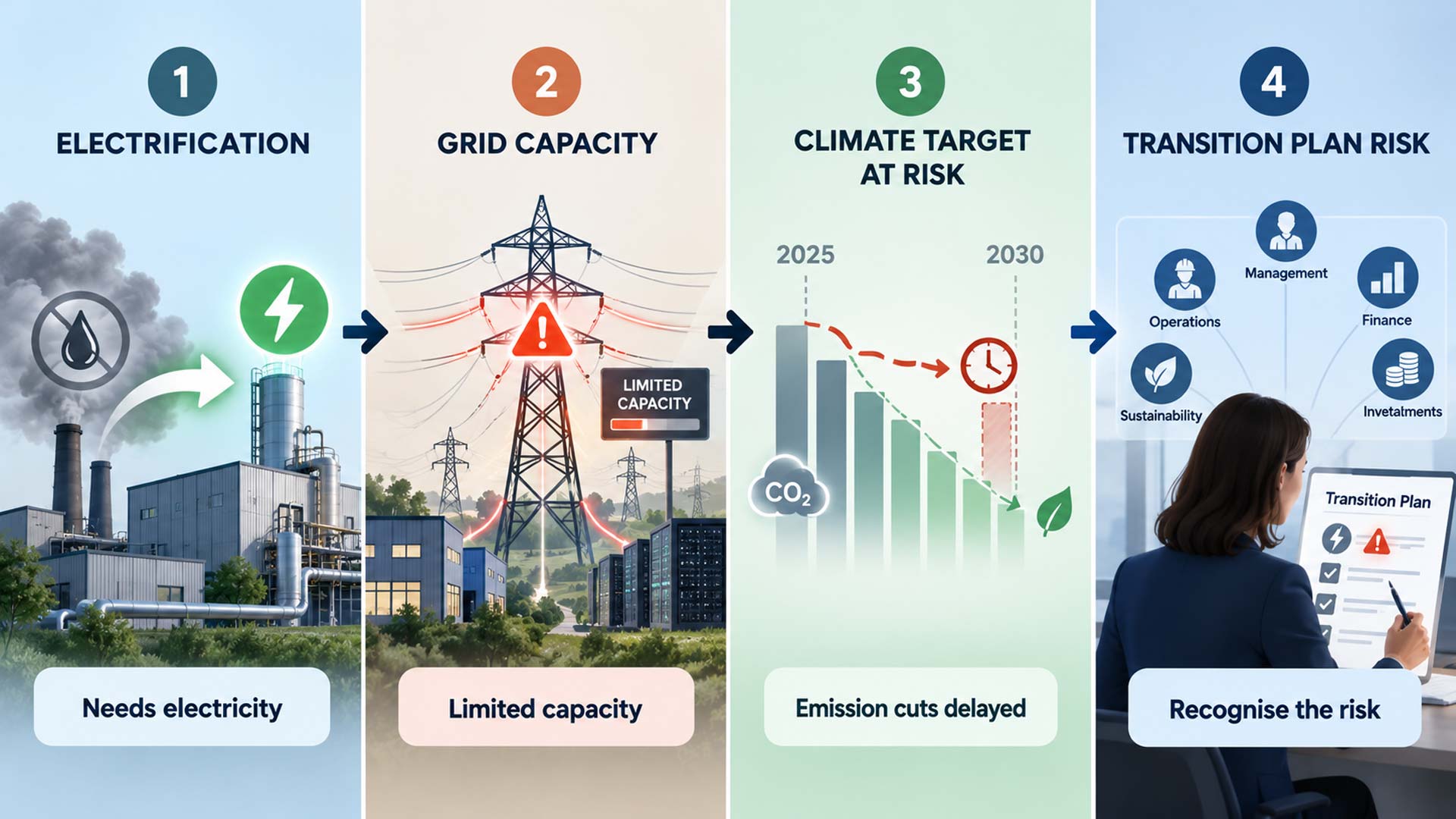
- Electrification creates a dependency on electricity. Many corporate climate plans rely on replacing fossil fuels with electricity.
- Grid capacity is becoming a constraint. In parts of Europe, companies already face limited capacity and long connection times.
- Climate targets could be affected. Delayed electrification can also delay planned emission reductions.
➡︎ This is a transition plan risk. ESG managers should make sure this dependency is recognised in the plans and understood by the people responsible for delivering it.
How Grid Constraints Can Affect Climate Transition Plans
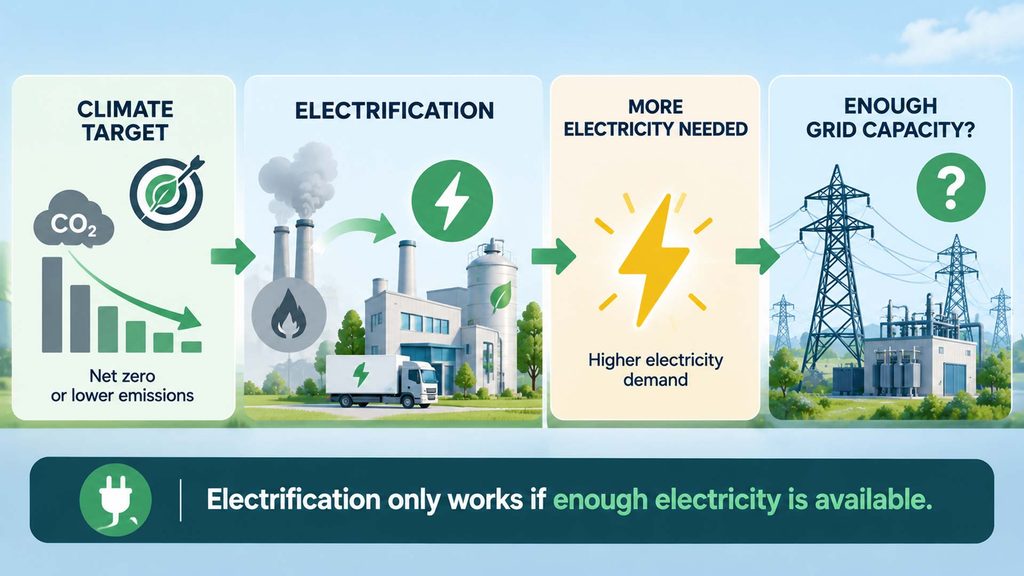
Electrification is a key part of many companies’ plans to reduce emissions. Instead of using fossil fuels directly, companies can switch to electricity for industrial processes, heating, transport and other operations. When that electricity comes from low-carbon sources, this can significantly reduce emissions.
But electrification creates an important dependency. It only works if enough electricity is available where and when the company needs it.
This means that a company can make the investment and be ready to electrify, but still depend on enough electricity and grid capacity being available. A new electric production process, heating system or charging infrastructure may also require more capacity from the electricity grid.
For ESG managers, this is the important connection to understand:
Climate targets → electrification → more electricity demand → sufficient grid capacity
As electrification becomes a bigger part of corporate decarbonisation, access to electricity can also become a factor in whether planned emission reductions can be delivered on time.
What’s Changing
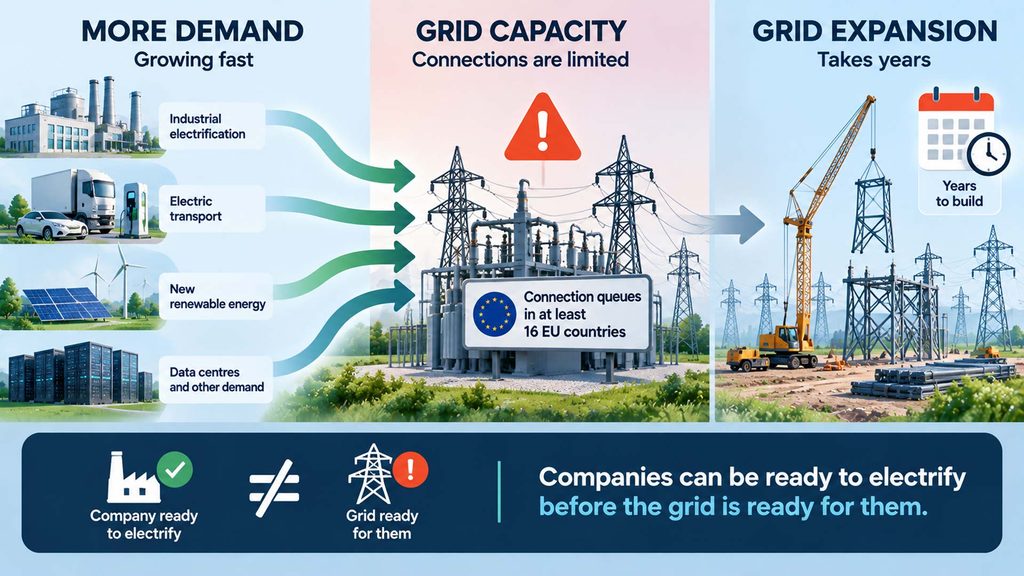
Electrification is growing faster than the electricity grids needed to support it. New renewable energy, industrial electrification, electric transport and other new electricity demand are all competing for grid capacity.
In parts of Europe, companies are already having to wait for new grid connections or additional electricity capacity. The European Commission says grid connection queues exist in at least 16 EU countries. The Nordic grid operators have also warned that requests for new connections significantly exceed the capacity available in the short and medium term.
One reason is simple: New demand can be created much faster than new grid infrastructure can be built. A company may be ready to electrify a factory or another part of its operations, while increasing the grid capacity needed for the project can take years.
Companies may have assumed that if they are ready to electrify, the electricity capacity they need will also be available. This is no longer something they can take for granted. Having an electrification plan and investment does not automatically mean that enough electricity will be available when and where it is needed.
Why This Creates a Risk
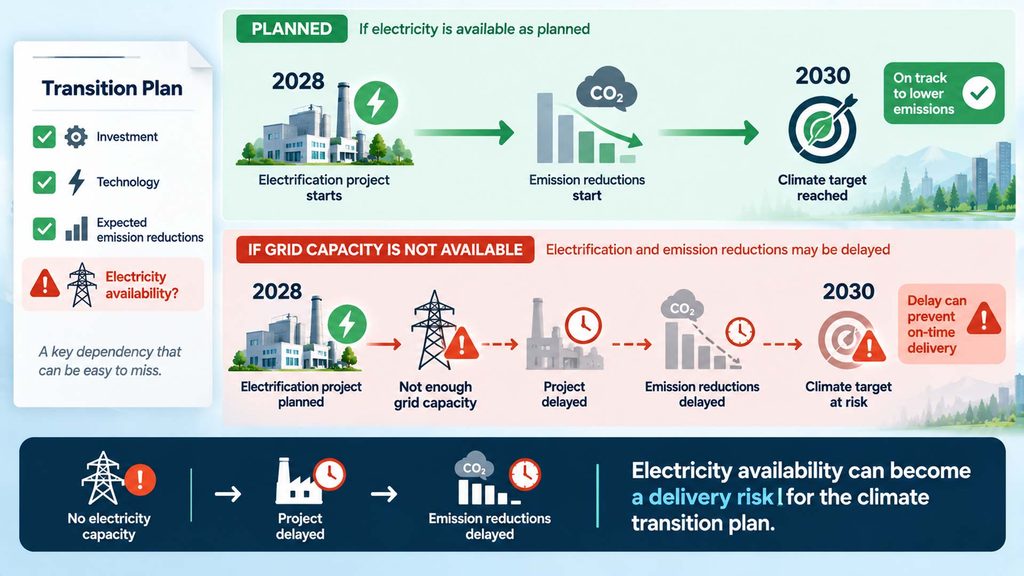
If a climate transition plan depends on electrification, limited grid capacity can become a delivery risk.
A company may plan to electrify a production process in 2028 and expect this to help reach its 2030 climate target. But if the company cannot get enough electricity capacity in 2028, the investment may be delayed. The expected emission reductions may also be delayed.
This is already affecting industrial electrification projects in Europe. Some companies have to wait years for new grid connections or more electricity capacity. This can delay investments that are needed to reduce emissions.
The risk can also be easy to miss. A transition plan may include the investment, technology and expected emission reductions without clearly showing that its success depends on sufficient electricity being available at the right place and at the right time.
For ESG managers, this is the key point: electricity and grid capacity can be an external dependency behind the company’s climate targets. If that dependency is uncertain, it should also be recognised as a risk in the transition plan.
What Can Be Done About It
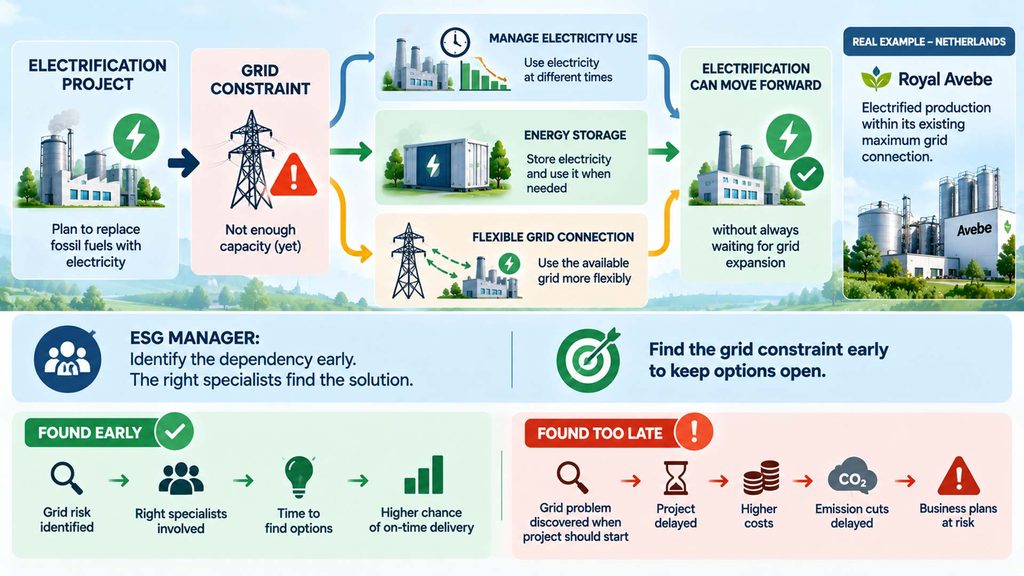
Limited grid capacity does not always mean that electrification has to wait until the grid is expanded. There may be other ways to move forward.
Companies can work with energy and grid specialists to understand how much additional capacity is really needed and when. Solutions such as managing electricity use at different times, energy storage and more flexible grid connections can sometimes help companies operate within the capacity already available. The IEA highlights these kinds of flexibility measures as ways to make better use of existing grids while new infrastructure is being built.
There are already practical examples. In the Netherlands, Royal Avebe has been able to electrify part of its production without increasing its maximum grid connection. The company uses active energy management to keep electricity demand within the available capacity.
The important lesson for ESG managers is not to find the technical solution themselves. It is to identify the dependency early enough for the right people in the company to manage it.
Finding the grid constraint early gives the company time to respond. Finding it too late can delay the project, increase investment costs, delay planned emission reductions and even put the related business plans at risk.
The ESG Manager’s Role
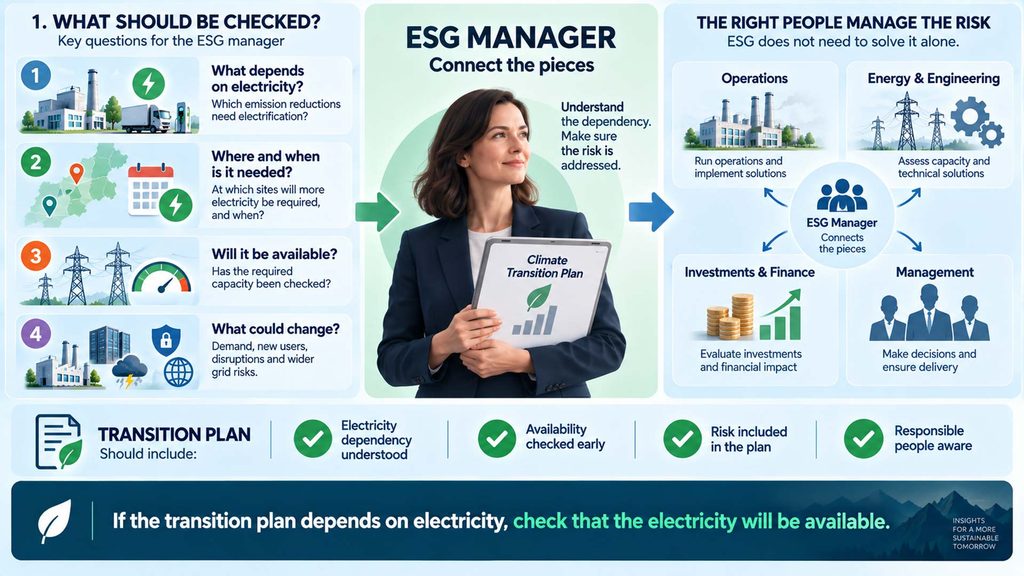
ESG managers should not become grid experts or solve electricity capacity problems themselves. Their role is to understand where the climate transition plan depends on electrification and whether this dependency creates a risk.
A useful starting point is to ask:
- What depends on electricity? Which planned emission reductions require significant electrification?
- Where and when is it needed? At which sites will additional electricity capacity be required, and when?
- Has availability been checked? Do the people responsible for operations, energy and investments know whether the required capacity will be available?
- Could demand increase? Could new factories, data centres or other large electricity users increase demand and make capacity harder to get?
- Could availability change? Are there other developments in the electricity system that could affect the capacity the company expects to use?
- Are these risks in the plan? Have these dependencies and uncertainties been considered when assessing whether the transition plan can be delivered?
ESG managers do not usually own these questions. Operations, energy, engineering or investment teams may be responsible for finding the answers and managing the risks.
The ESG manager’s role is to connect the pieces: make sure the electricity dependency is understood, the risk is reflected in the transition plan, and the people responsible for delivering the plan are aware of it.
➡︎ If major electrification is part of the climate transition plan, make sure the company has checked whether the electricity capacity it needs is expected to be available where and when it is needed.
Learn More
- European Grids — European Commission
Current EU overview of grid capacity, connection queues and the actions being taken to improve grid connections.
Read on European Commission - Grids – Electricity 2026 — International Energy Agency (IEA)
Explains why grid capacity is becoming a bottleneck, why grids take longer to build than new electricity demand, and what can be done to unlock capacity.
Read on IEA - Industrial Electrification in the EU – Blocked by the Grid? — E3G
Particularly relevant to this article because it looks directly at how grid constraints are delaying industrial electrification and decarbonisation projects in Europe.
Read on E3G - Strong Growth in Grid Connection Requests Challenges the Power System — Nordic TSOs / Svenska kraftnät
A useful Nordic perspective from Fingrid, Energinet, Statnett and Svenska kraftnät. They report that requested connection capacity significantly exceeds what is currently available in the short to medium term across the Nordic countries.
Read the Nordic TSO statement