


ESG Ahead Brief of the Article
This content requires a membership. Please, log in or subscribe a Premium plan to continue and see the whole content.
Key Takeaways
Full Article:
The long ESRS revision process is finished
The revised European Sustainability Reporting Standards (ESRS) were published in the Official Journal of the European Union on 21 September 2026. This is an important step in the EU’s work to simplify sustainability reporting.
The revision is part of the EU’s Omnibus I initiative, which aims to reduce the reporting burden for companies. For companies affected by CSRD, there is now much more clarity about the reporting requirements.
The question can start moving from:
“What will happen to ESRS?”
to:
“What do we need to do now?”
ESRS reporting has become much simpler
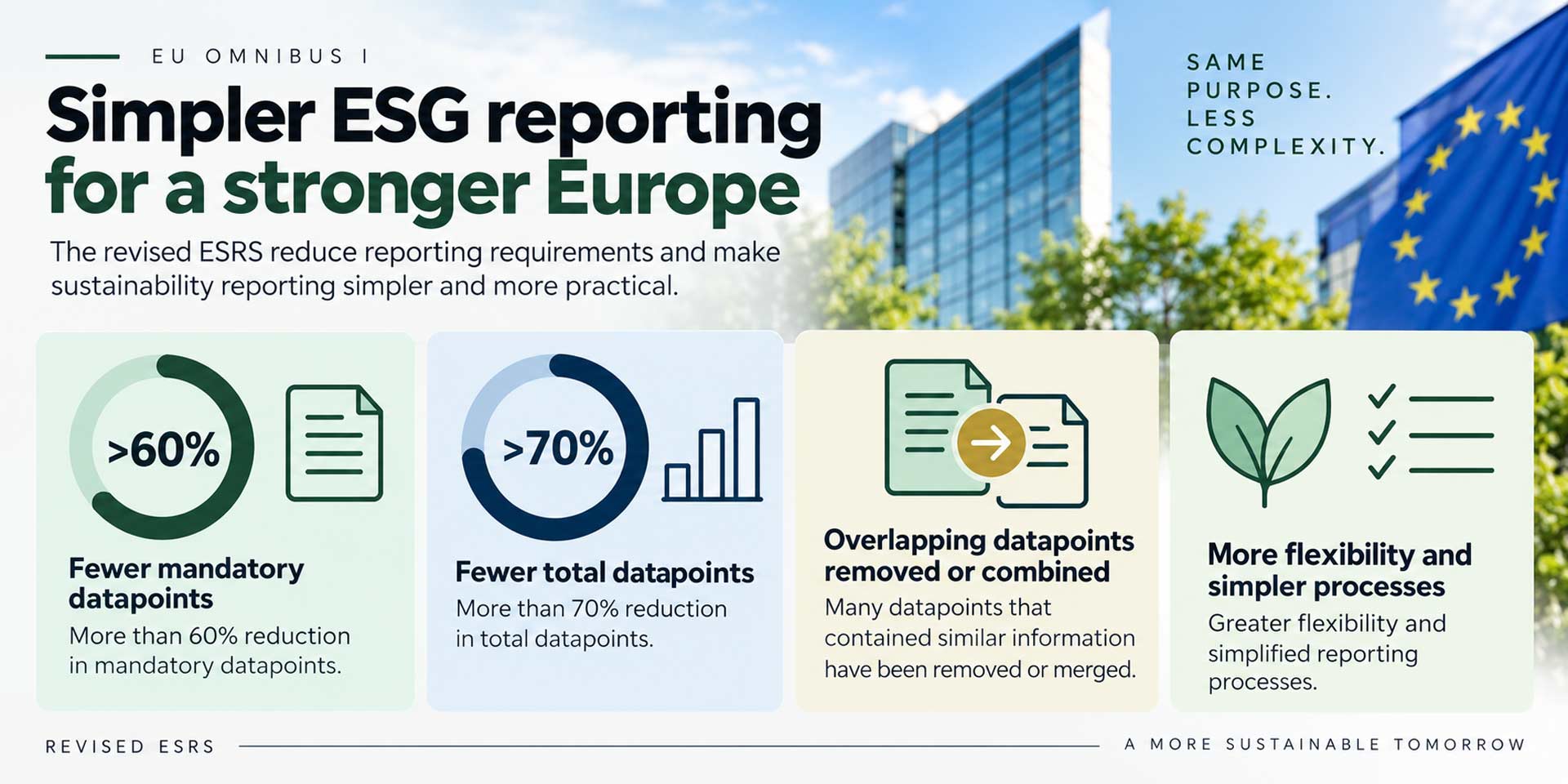
The changes are significant. According to the European Commission, the revised standards:
- reduce mandatory datapoints by more than 60%
- reduce total datapoints by more than 70%
- give companies more flexibility
- simplify several parts of the reporting process
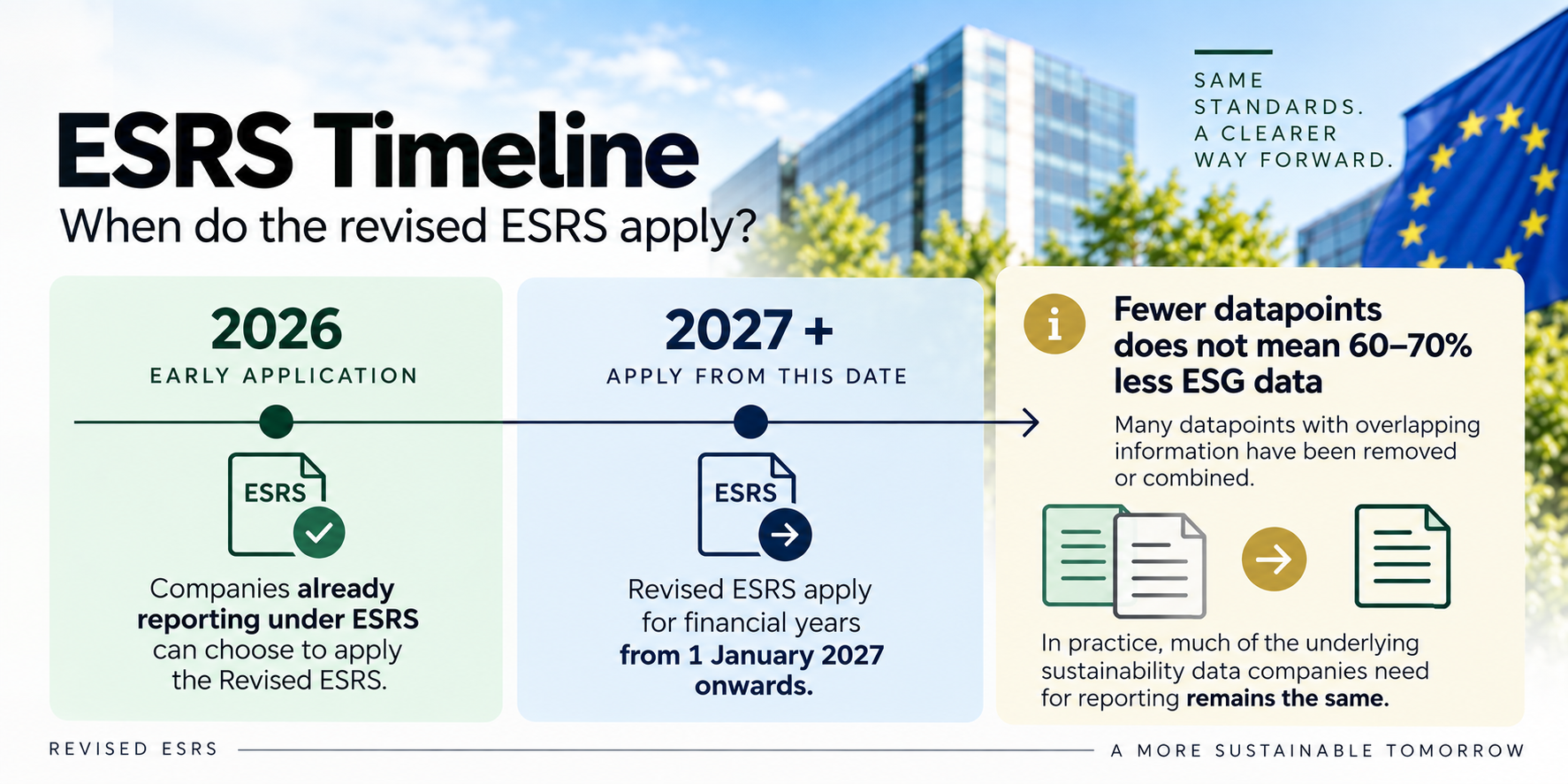
But fewer datapoints does not mean companies need 60–70% less sustainability data. Many datapoints containing overlapping information have been removed or combined. In practice, much of the underlying data companies need for reporting remains the same.
The Commission estimates that the changes could reduce sustainability reporting costs by more than 30% per company.
This doesn’t mean sustainability reporting is going away. Companies within the scope of CSRD will still need to report under ESRS. There are considerably fewer individual datapoints, and companies have more flexibility to focus their sustainability statement on material information. But much of the underlying sustainability data is still relevant. The simplification comes partly from removing overlaps and combining reporting requirements.
We will look at the most important changes in the revised ESRS in the next article in this series.
The important dates: 2026 and 2027
The revised standards apply to financial years beginning on or after 1 January 2027.
But companies already reporting under ESRS have another option:
- FY2026: Companies already reporting under ESRS can choose to use the revised ESRS.
- FY2027 onwards: The revised ESRS apply.
This means ESG teams preparing their next sustainability report have an important question to consider:
Should we start using the revised ESRS already for FY2026?
The answer depends on your company’s situation and how far you are with your current reporting process.
If Omnibus put your work on hold, look at it again
Omnibus created uncertainty for many ESG teams. Companies knew that the reporting requirements were changing, but they didn’t yet know what the final rules would be.
It made sense to ask:
Why build reporting processes around requirements that may soon change?
Now the revised ESRS are final, and much of that uncertainty is over. If your organisation slowed down or paused its ESRS work, now is a good time to look at it again.
But don’t simply continue where you stopped. The standards have changed significantly. Some datapoints have been removed or combined, but much of the underlying data may still be needed. Before changing your data collection processes, check what has actually changed in the revised requirements.
What ESG managers should do now
You don’t need to rebuild everything immediately. First, understand what the revised standards mean for the reporting work your company has already done.

Veini Simolin
ESG and sustainability expert
ExecutESG Oy
“The long wait is over. Large companies now know better what to report and what they can ask from suppliers. For smaller companies, getting ahead with the voluntary standard can help them stay ready for customer requests and tenders.”
Start with three questions:
- When do the revised ESRS apply to us?
Check when your company needs to start using the revised standards. - What has actually changed for us?
Identify which datapoints have been removed, combined or simplified — and check what underlying data you still need before changing your reporting processes. - Should we use the revised ESRS already for FY2026?
If this option is available to your company, consider whether starting early would make your next reporting cycle easier.
The main message is simple:
The wait for the final ESRS is over. Now it is time to understand what has changed and what your company needs to do next.
Learn More